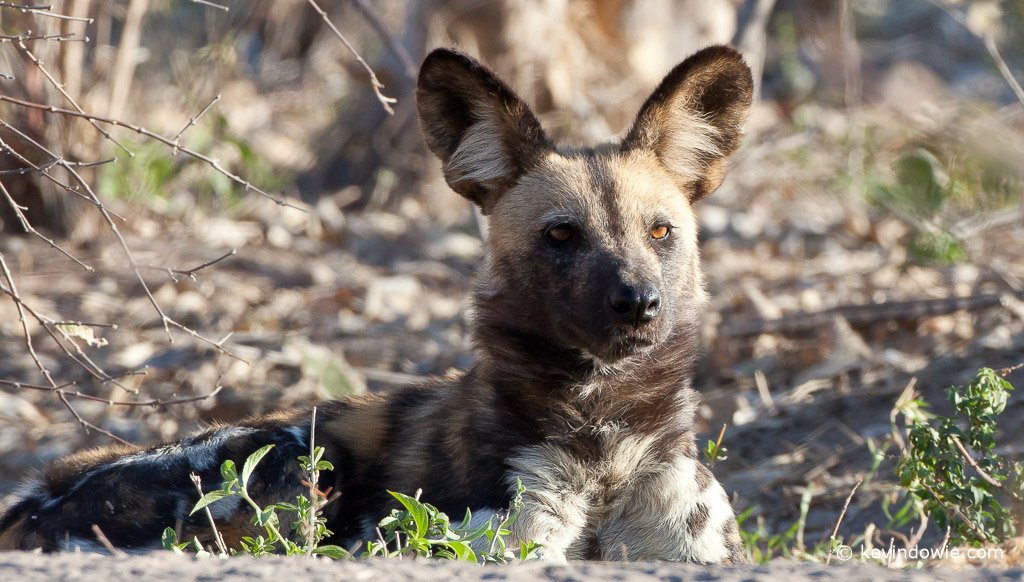
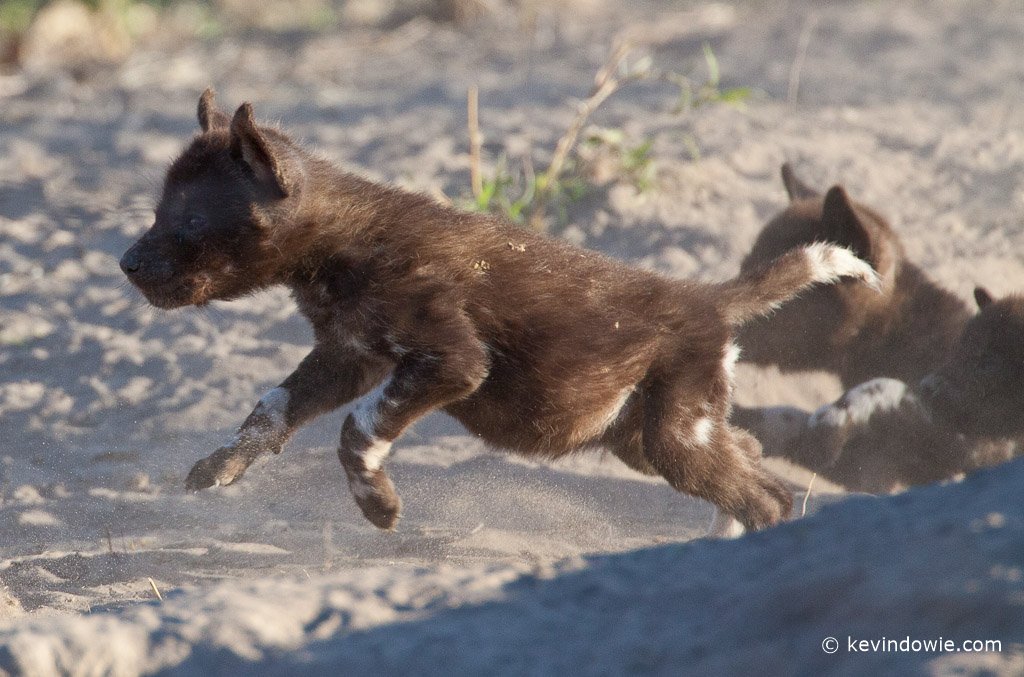
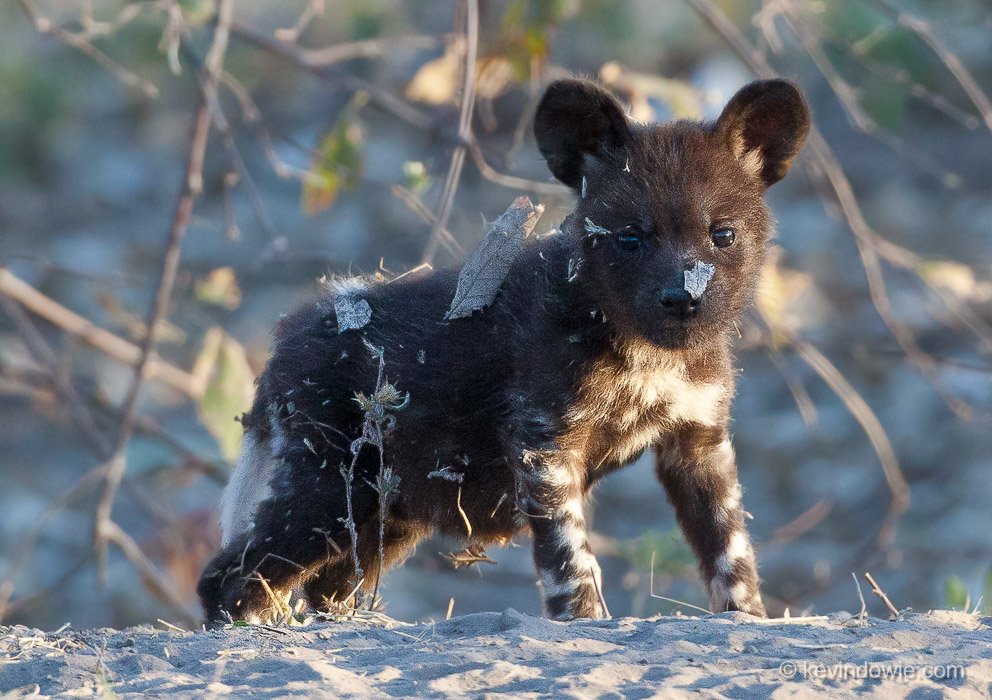
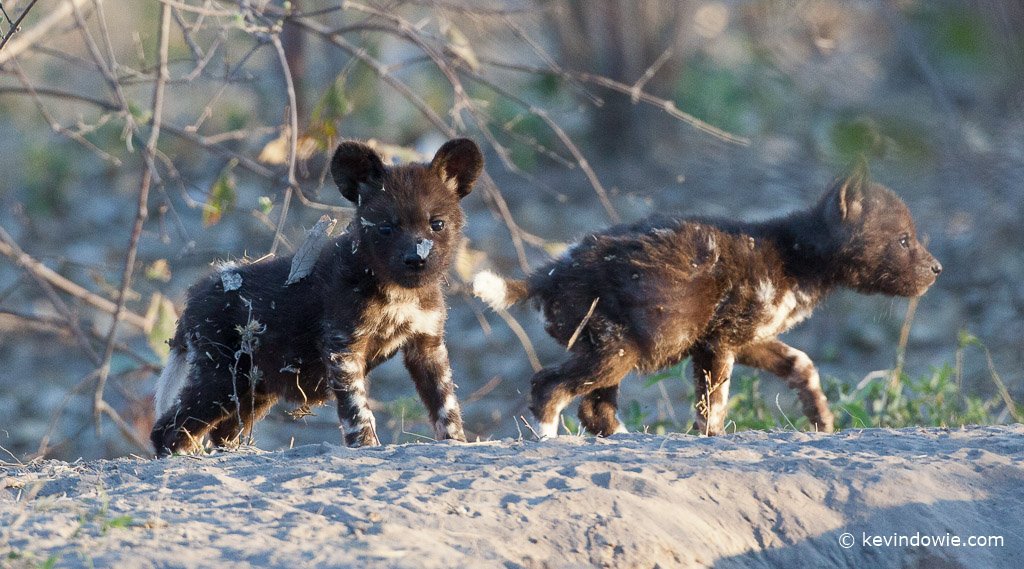
During the course of a photographic workshop/safari in Botswana in July-August, 2009, I was fortunate enough to observe and photograph members of an African wild dog pack. The African wild dog (Lycaon pictus) is a threatened species and opportunities to see and photograph them in the wild are rare.
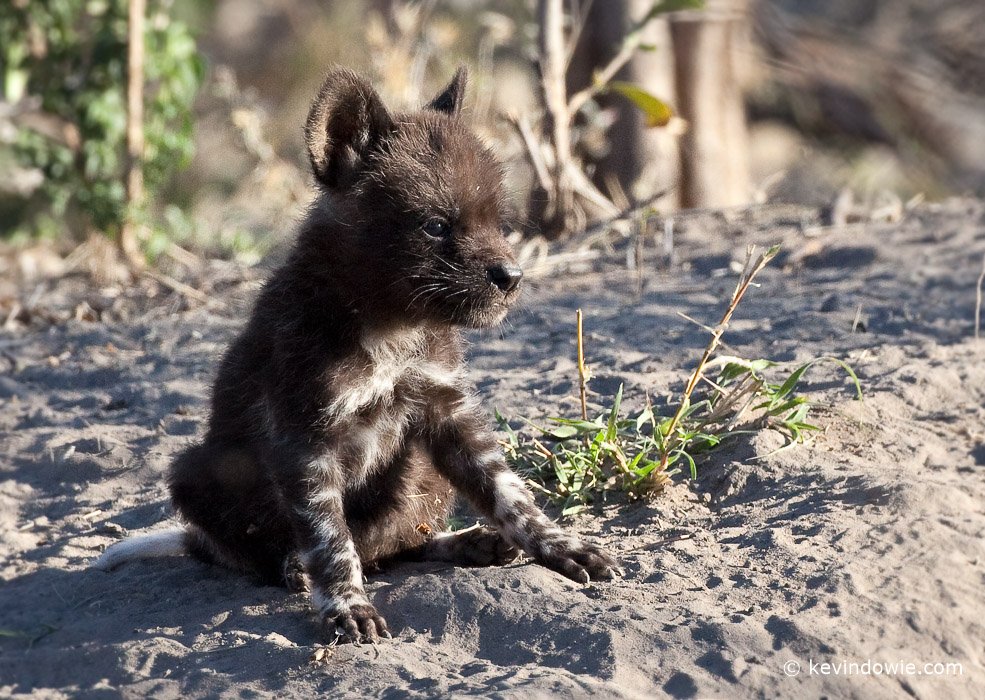
These pictures were taken at the den of a litter of pups in the Okavango Delta region near Savuti Channel camp. There were 13 pups in the litter and, characteristically for this species, they were being guarded by a single adult whilst the remainder of the adults were out hunting in the early morning. The site chosen by the pack for the den was a large burrow and typically would have been dug and abandoned by another animal or animals. These dog packs have a highly evolved social structure with the dominant, or “alpha” male and female breeding, whilst the remaining adults assist in the rearing of the single litter of pups.
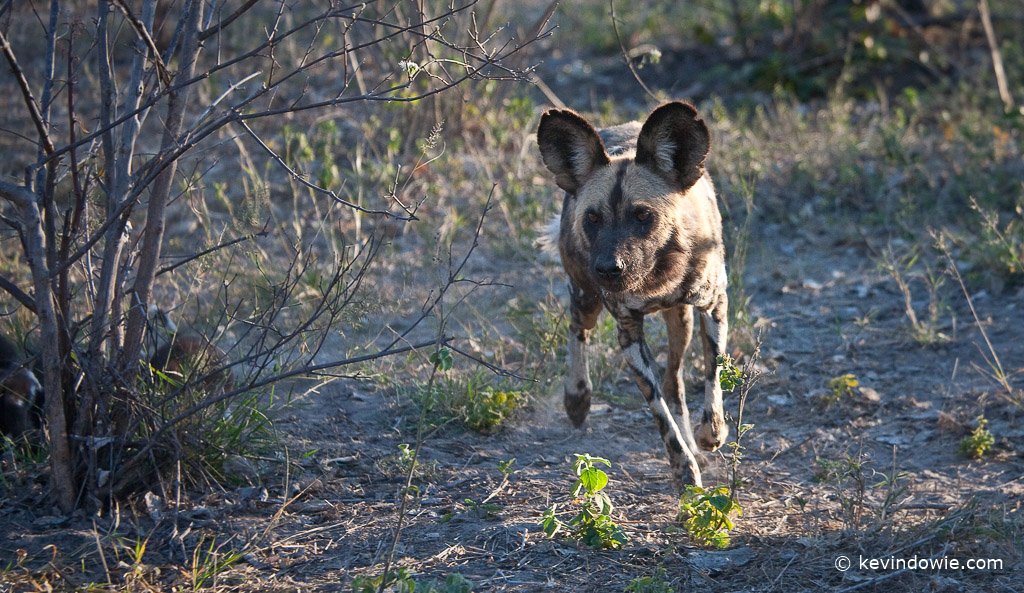
Given their status as a threatened species, we restricted our time at the den so as to minimize our potential impact on the dogs. This combined with the dogs preference for a location with plenty of scrub meant that getting clear shots of them was a challenge. These shots were almost all taken through a small gap of 1 or 2 metres between bushes.
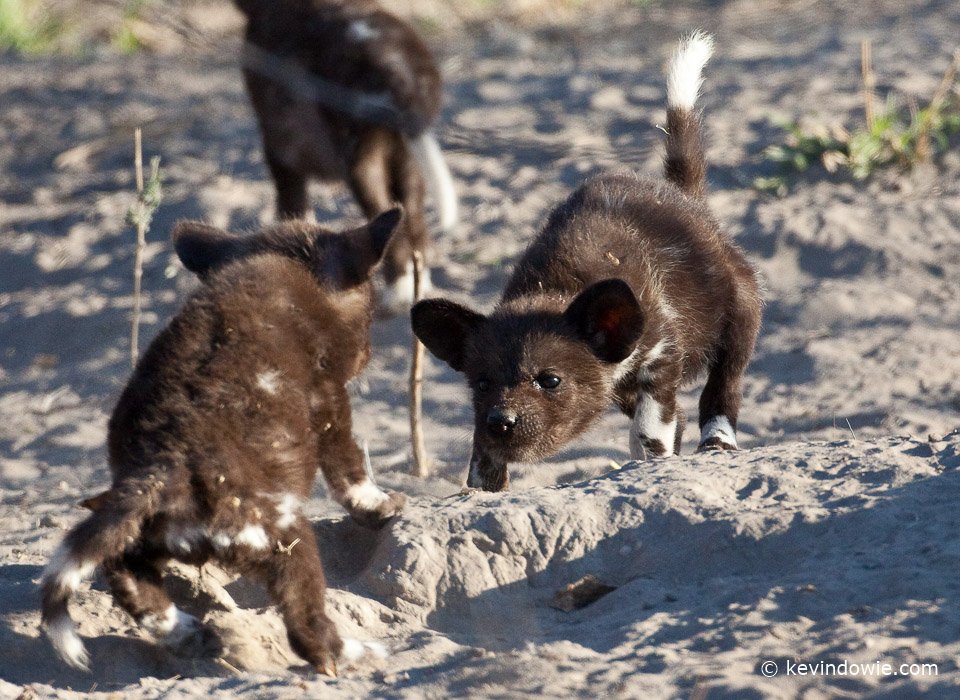
Whilst an adult kept guard, the pups spent most of their time playing and chasing each other near the entrance to the den.
The adult performing guarding or “babysitting” duties may be either male or female and not necessarily a parent of the litter. Early morning, near Savuti Channel camp.
The scientific name Lycaon Pictus means “painted wolf” and whilst the dogs are not actually “wolves” the “painted” tag is appropriate. Each dog is quite individual in its markings, but the common marking is the white tip on the tail which it’s believed may have some significance as a signal, or identifier, for other members of the pack when hunting.
Sibling rivalry? Pups are born after a gestation period of about 10 weeks with a litter consisting of between 2 and 20 pups with about 10 being the average litter size. Pups are weaned at about 10 weeks of age and by the age of 12 months will be capable of fully participating in hunting activities. Sexual maturity is reached at 12 to 14 months but only the alpha pair will breed, with the breeding capability of other adults in the pack being suppressed, so that all the efforts of the pack are directed to the success of the one litter.
Wild dogs are extraordinarily effective hunters. Hunting as a pack, they rely on endurance and teamwork for success. Usually hunting in the early morning or early evening, the pack will run down prey, coordinating their movements through a series of vocalizations and pursuing their quarry to the point of exhaustion. It’s estimated that at least 80 per cent of hunts are successful making them probably the most effective, and feared, of Africa’s carnivores. Prey species include the antelope species up to and including even Eland.
Some behaviour is learnt rather than instinctive including, specific techniques for hunting large prey, and also finding reliable water supplies. Having hunted down and killed its prey, the dogs will eat quickly before other predator species such as hyenas have the opportunity to steal the kill.
Wild dog packs require significant land area to accommodate their natural hunting range. A pack will typically have a range of 1500 square kilometres with the range of some packs overlapping with those of other packs. In the event that a pack is raising a litter of pups, as was the case near Savuti, the pack’s range will be more restricted. Interestingly, whilst in other species, whether predator or prey, status or dominance within a pack, pride or herd is often achieved through physical contest or violent confrontation, in the case of the wild dog there is very rarely any display of aggression between pack members. Status is determined not by aggression but by submissive behaviour.
Threats and Survival Status.
It’s estimated that historically there were some 500,000 wild dogs in Africa being distributed over some 39 countries. In that earlier time, it was not unusual for packs to number over 100 dogs. Long unfairly seen as livestock killers and as a result subject to hunting and poisoning, their numbers have been reduced to probably below 3000 individuals and they are now only sighted in as few as 14 countries. The dogs face many other challenges. They are naturally preyed upon by lions and hyenas but, as is a common theme in conservation, a major issue is loss of habitat through the impact of human development. Part of the problem for the dogs is in their requirement for an extensive range as discussed earlier. The range of dog packs is so great that national parks and game reserves are often too small to accommodate the animals with the result that their activities extend beyond the parks and into neighbouring agricultural land. In addition to this, the dogs are also susceptible to diseases such as rabies and canine distemper picked up through contact with domesticated dogs. The highly social behaviour of a dog pack means that such disease can quickly sweep through an entire pack.
Conservation efforts in recent years have included the captive breeding of dogs and their reintroduction back into the wild together with increased survey and study activities.
Suggested further reading……
Botswana Predator Conservation Trust
HI – Love the shots of your wild dogs – especially the pup. Wild dogs and Hyenas are my favorite African animals. I haven’t been to Africa but have a 4 week trip in the making for next July.